Extruded Aluminum Window Framing: Engineering Guide to Profiles, Performance & Precision

When architects specify windows for contemporary residential projects, extruded aluminum window framing provides the foundation for both aesthetic achievement and structural performance. The extrusion process—forcing heated aluminum alloy through precision-engineered dies—creates frame profiles that enable floor-to-ceiling transparency, minimal sight lines, and exceptional load-bearing capacity across decades of operation.
Extruded aluminum window framing differs fundamentally from assembled frame systems common in residential construction. Rather than purchasing pre-fabricated sections from multiple suppliers, extrusion creates continuous aluminum profiles with integrated thermal breaks, precise geometries, and consistent material properties throughout each length. This manufacturing precision proves especially critical in applications demanding large-format panels, minimal visual mass, or seamless integration between different window and door types.
The engineering decisions embedded in extruded aluminum window framing affect every aspect of installed performance. Alloy selection determines extrudability and surface finish quality. Frame depth accommodates thermal break technology that prevents heat transfer. Profile geometry balances structural capacity against sight line minimization. Heat treatment protocols develop the strength properties that enable large glass areas without excessive frame dimensions.
For projects where natural light, unobstructed views, and architectural precision define success, understanding extruded aluminum window framing manufacturing processes enables informed specification decisions that deliver both design vision and measurable performance outcomes.
What Is Extruded Aluminum Window Framing?

Extruded aluminum window framing refers to frame profiles created through the aluminum extrusion process. Manufacturers heat cylindrical aluminum billets to 750-970°F until malleable, then force this heated metal through precision steel dies under 800-2500 tons of hydraulic pressure. The die's machined opening determines the exact cross-sectional shape of the extruded aluminum window framing profile.
The aluminum extrusion process creates profiles in continuous lengths reaching 40 feet or more. As heated aluminum passes through the die, it emerges maintaining the die's precise geometry whether that involves simple rectangular frames or complex hollow sections with integrated thermal break chambers. Aluminum window profiles can be customized in various shapes, sizes, and finishes to meet specific project requirements, enabling everything from minimalist residential windows to monumental architectural installations. Once cooled and cut to length, these extruded aluminum profiles become the structural framework for window systems.
How the Aluminum Extrusion Process Creates Window Frames
Understanding the complete manufacturing sequence reveals how extruded aluminum window framing achieves its performance characteristics:
Billet preparation - Aluminum alloy logs are cut and preheated to 750-970°F, creating malleable metal without melting
Die heating - Steel dies reach 840-930°F preventing thermal shock during extrusion
Hydraulic extrusion - Press rams apply 800-2500 tons of force pushing aluminum through shaped dies
Rapid cooling - Water or air quenching locks aluminum into desired crystalline structure
Stretching - Mechanical stretching ensures straightness and relieves internal stresses
Heat treatment - Controlled aging develops final strength properties in the extruded aluminum
Fabrication - Cutting, machining, and assembly transform profiles into complete window frames
Modern extruded aluminum window framing systems demonstrate the process capabilities. Sosoares' OS-D+ system achieves 13-foot heights while maintaining sight lines under an inch and supporting 1,100 pounds per sash across 86 square foot panel areas.
Which Aluminum Alloy Provides Best Performance for Window Framing?

Aluminum alloy selection fundamentally shapes extruded aluminum window framing performance. Two alloys dominate architectural window production, each engineered for specific performance priorities.
Architectural Aluminum: 6063 Alloy
The 6063 aluminum alloy represents the standard for extruded aluminum window framing in architectural applications. This alloy contains 0.45-0.9% magnesium and 0.2-0.6% silicon, creating material properties optimized for the extrusion process. The lower alloying element content allows 6063 to flow smoothly through complex die geometries, enabling thin-wall sections and intricate profiles.
Key performance characteristics of 6063 extruded aluminum window framing:
Tensile strength of 27,500 psi in T6 temper
Superior extrudability enabling complex profile geometries
Exceptional surface finish quality ideal for anodizing
Corrosion resistant for coastal environments
Lower material cost compared to structural alloys
Sosoares' ST system exemplifies 6063 capabilities in extruded aluminum window framing. The 71mm frame depth combines with 39mm thermal break widths while achieving Class E1350 water tightness ratings. This performance level requires both appropriate alloy selection and precision extrusion manufacturing.
Structural Aluminum: 6061 Alloy
When extruded aluminum window framing must support extreme loads or span large unsupported dimensions, 6061 alloy provides approximately 50% higher tensile strength. At 42,000 psi in T6 temper, 6061 enables slimmer frame profiles for equivalent structural capacity.
The 6061 alloy contains 0.8-1.2% magnesium and 0.4-0.8% silicon. These higher alloying percentages create stronger material but reduce extrudability and surface finish quality compared to 6063. Most architectural window applications prioritize 6063's manufacturing advantages, reserving 6061 for specific structural demands.
Property | 6063 Architectural | 6061 Structural |
Tensile Strength (T6) | 190 MPa | 290 MPa |
Extrudability | Superior | Moderate |
Surface Finish | Exceptional | Good |
Anodizing Quality | Excellent | Fair |
Typical Applications | Window frames, doors, facades | High-load structural members |
Cost | Standard | Premium |
For extruded aluminum window framing in luxury residential projects, 6063 alloy typically delivers optimal balance between performance, aesthetics, and manufacturing economics. The superior surface finish proves especially valuable where powder coating or anodizing creates the refined appearance that contemporary architecture demands.
Why Do Frame Depth and Thermal Break Width Matter in Extruded Aluminum Window Framing?

Frame depth represents the critical dimension in extruded aluminum window framing engineering. This measurement from exterior to interior face determines thermal movement performance, structural capacity, and glazing type accommodation. Contemporary extruded aluminum window framing systems range from minimalist 1.25-inch profiles to substantial 2.8-inch depths.
Thermal Break Integration Requirements
The most critical aspect of extruded aluminum window framing depth involves accommodating thermal break technology. Without thermal breaks, aluminum's high thermal movement creates energy losses and interior condensation. Modern high-performance extruded aluminum window framing uses polyamide or polyurethane barriers separating interior and exterior aluminum sections.
Effective thermal breaks typically measure 0.8-1.5 inches wide depending on climate requirements:
1.25-inch total depth (32mm) (OS-D+ system): Accommodates double glazing with thermal break, achieving Uw = 1.48 W/m²K
2.2-inch total depth (56mm) (OS-T system): Enables triple glazing for enhanced energy performance
2.8-inch depth (71mm) with 1.5-inch (39mm) fixed frame thermal breaks (ST system): Houses 39mm fixed frame thermal breaks delivering maximum insulation
Insufficient frame depth in extruded aluminum window framing forces compromises between thermal break effectiveness and glazing options. Shallow profiles cannot accommodate both adequate thermal separation and modern insulated glass units.
Structural Performance Relationships
Deeper extruded aluminum window framing profiles provide greater structural rigidity enabling larger panel dimensions. The OS-D+ system's capacity to support 1,100 pounds per sash across 86 square foot areas reflects sophisticated profile engineering where material placement maximizes strength-to-weight ratios.
Complex hollow geometries within extruded aluminum window framing add structural rigidity without proportional weight increases. Multiple chambers created during the process provide:
Enhanced moment of inertia resisting deflection under load
Pathways for concealed wiring and drainage systems
Hardware mounting locations reinforcing mechanical attachment points
Thermal separation preventing heat transfer through conductive paths
The frame depth specification in extruded aluminum window framing directly enables or constrains architectural possibilities. Minimal-sightline contemporary designs require engineering precision balancing shallow profiles against structural and thermal performance demands.
For a closer look at how that insulating barrier works and why it matters for comfort and condensation, see our guide to thermal break windows.
How Does Heat Treatment Strengthen Extruded Aluminum Window Framing?
Heat treatment transforms extruded aluminum window framing from as-formed profiles into precision-engineered structural components. Controlled heating and cooling cycles manipulate aluminum's crystalline structure, developing strength and hardness properties impossible to achieve through extrusion alone.
Two heat treatment protocols dominate extruded aluminum window framing production, each designated by temper codes following the alloy number.
T5 Heat Treatment for Architectural Window Framing
The T5 process represents the standard heat treatment for extruded aluminum window framing in architectural applications. This treatment begins immediately after extrusion when profiles exit the die at elevated temperature.
T5 process parameters for extruded aluminum window framing:
Air cooling from extrusion temperature (750-970°F)
Transfer to aging furnaces at approximately 390°F
Holding time of 6-8 hours typical
Gradual cooling to room temperature
This T5 treatment increases tensile strength by 40-60% compared to annealed aluminum. For 6063 alloy extruded aluminum window framing, T5 develops approximately 23,000-26,000 psi tensile strength. This proves adequate for most architectural applications at lower processing cost than T6 treatment.
The Aluminum Association confirms that T5 treatment particularly suits extruded profiles where controlled aging can occur immediately after forming. This makes T5 the economical choice for extruded aluminum window framing, door systems, and curtain walls.
T6 Heat Treatment for Maximum Strength
When extruded aluminum window framing applications demand peak material properties, T6 treatment provides superior strength and hardness. Structural glazing systems, extreme wind loads, or minimal frame dimensions benefit from T6's enhanced performance.
T6 process parameters for extruded aluminum window framing:
Solution heat treatment at 985°F for several hours
Water quenching at minimum 105°F/minute for 6063 alloy
Artificial aging at 320-375°F for 3-8 hours
Common aging cycles: 1 hour at 400°F, 5 hours at 350°F, or 8 hours at 325°F
T6 treatment develops 6063's full strength potential at approximately 27,500 psi tensile strength. For 6061 extruded aluminum window framing, T6 achieves 42,000 psi maximum capacity. The rapid water quench creates supersaturated solid solution where dissolved alloying elements become trapped in aluminum's crystalline structure. Subsequent aging allows controlled precipitation as microscopic particles blocking crystalline defect movement, dramatically increasing strength.
Most extruded aluminum window framing manufacturers reserve T6 for applications where additional strength justifies higher processing costs and potential distortion during quenching.
What Manufacturing Tolerances Ensure Precision in Extruded Aluminum Window Framing?

Dimensional precision in extruded aluminum window framing directly impacts assembly efficiency, weather sealing effectiveness, and operational longevity. Manufacturing tolerances define acceptable dimensional variations from specified measurements.
Standard Tolerances for Extruded Aluminum Window Framing
Industry specifications published in ASTM B221 and EN 755-9 establish dimensional accuracy standards for extruded aluminum window framing:
Dimensional tolerances:
Wall thickness: ±0.2-0.3mm depending on nominal thickness
Cross-sectional dimensions: ±0.3mm typical for profiles under 200mm
Length: ±1.5mm for standard lengths
Geometric tolerances:
Straightness: 0.04 inches maximum deviation per foot of length
Twist: 0.5 degrees per foot (approximately 1.5 degrees per meter)
Flatness: 0.004 multiplied by surface width
Angular deviation: ±1 to ±2 degrees from specified angles
These standard tolerances suit most extruded aluminum window framing applications, ensuring proper gasket compression, smooth operation, and weather-tight assembly without excessive manufacturing cost.
Precision Class Systems for Custom Applications
Applications demanding tighter dimensional control in extruded aluminum window framing implement enhanced precision standards. Systems where multiple components must align precisely or minimal tolerances affect performance require Class A specifications.
Tolerance Parameter | Standard Class B | Precision Class A |
Wall thickness | ±0.15-0.25mm | ±0.05mm |
Straightness | 1mm/meter | 0.3mm/meter |
Angular accuracy | ±2 degrees | ±1 degree |
Surface flatness | 0.5-1.0% of dimension | less than 0.5% of dimension |
Precision tolerances in extruded aluminum window framing become essential when profiles must integrate seamlessly across different system types. Creating indistinguishable integration between sliding doors and fixed windows requires Class A dimensional control. The Thorne Gym installation demonstrates this precision where OS sliding doors align with ST fixed windows across 10-foot by 10-foot panels, maintaining matching sight lines and flush glazing planes.
The precision investment in extruded aluminum window framing proves particularly valuable for automated window systems. Mechanical operators demand consistent dimensions for smooth, reliable operation across thousands of cycles without binding or excessive wear. Quality installations also utilize stainless steel screws for frame connections, providing corrosion resistance that matches the aluminum's longevity particularly in coastal or high-moisture environments.
How Does Vertical Integration Improve Extruded Aluminum Window Framing Quality?
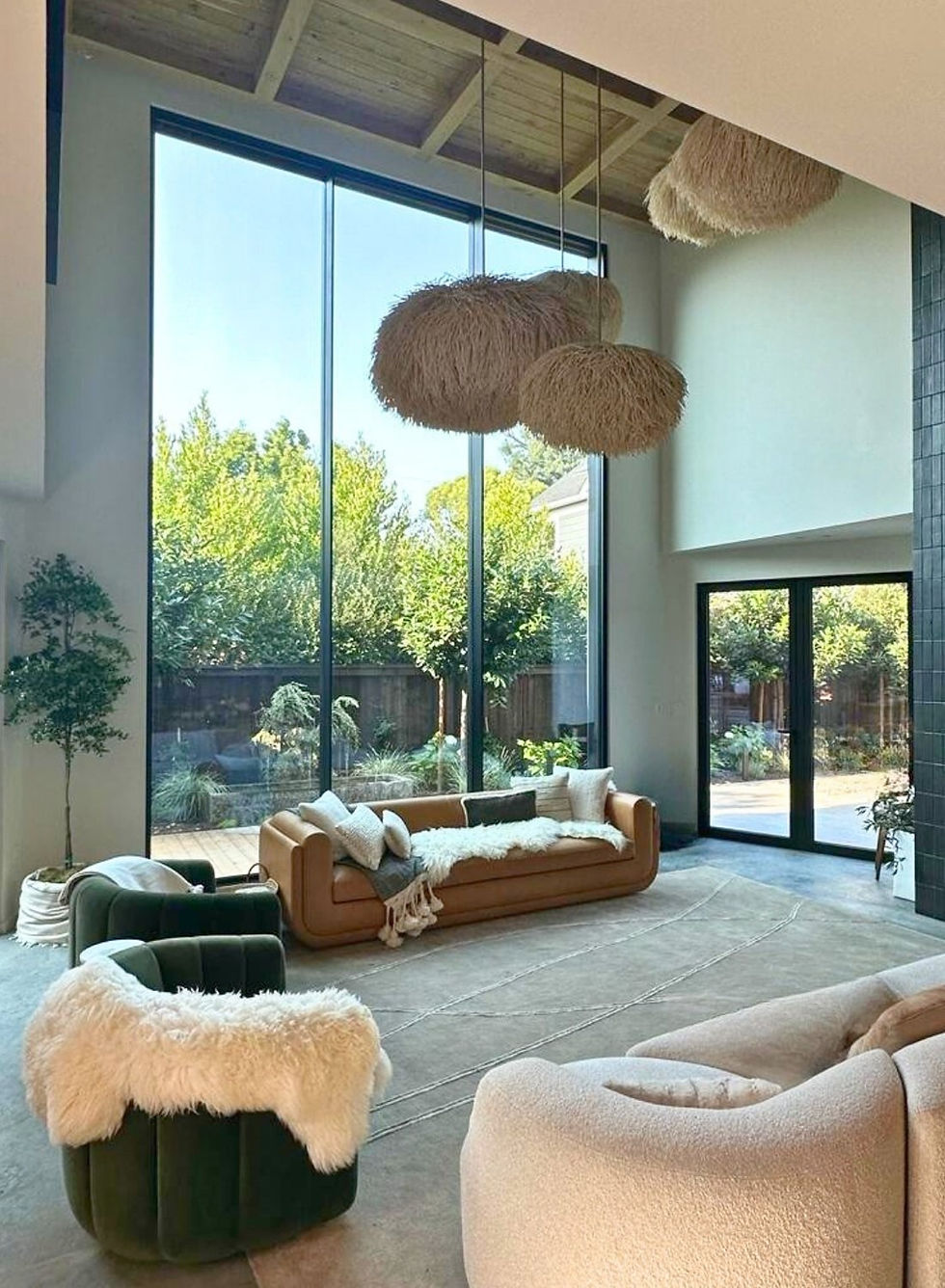
The manufacturing model fundamentally shapes extruded aluminum window framing quality, cost efficiency, and customization capability. Understanding different production approaches reveals why some manufacturers consistently deliver superior results.
Component Assembly Versus Integrated Manufacturing
Component Assembly Model:
Most North American extruded aluminum window framing suppliers purchase components from multiple sources. They buy extrusions from aluminum producers, source thermal breaks separately, obtain gaskets from specialty suppliers, and procure hardware from manufacturers. Each component supplier adds markup while high-quality product control spans disconnected supply chains. Custom capabilities face expensive minimum orders when requesting specialty extrusions from third-party producers.
Vertical Integration Model:
European manufacturers like Sosoares producing extruded aluminum window framing control the entire manufacturing sequence. They own extrusion presses producing proprietary profiles. They manufacture thermal breaks, hardware, and fasteners internally. They process glass and apply surface finishes in-house. This single-stream quality management extends from aluminum billet through finished frame assembly.
Cost and Quality Advantages of Integrated Production
Vertical integration in extruded aluminum window framing manufacturing creates counterintuitive economic advantages. By eliminating intermediate supplier markups, integrated manufacturers often achieve 20-40% lower costs than comparable-quality component assemblies. Many assume
European extruded aluminum window framing carries premium pricing due to international logistics, yet vertical integration proves more cost-effective than multi-supplier assembly despite shipping distances.
The quality advantages extend beyond cost savings:
Custom profile matching capability proves essential when engineering extruded aluminum window framing systems where different components must integrate visually. Sosoares engineers ST window profiles that precisely match OS sliding door sight lines, creating continuous glass walls where operable and fixed sections become indistinguishable. This requires coordinated die design ensuring identical exterior appearances despite different internal geometries.
Thermal break optimization improves when manufacturers integrate polyamide barriers during extrusion rather than retrofitting. Sosoares' ST system extruded aluminum window framing incorporates 39mm thermal breaks in fixed frames and 35mm in mobile frames. These dimensions reflect engineering specifically optimized for each profile's thermal bridging characteristics.
Quality consistency improves dramatically when extrusion, thermal break insertion, powder coating, and hardware installation occur under single quality management. Dimensional tolerances in extruded aluminum window framing stack predictably rather than compounding across multiple suppliers' variations.
What Enables Seamless System Integration in Extruded Aluminum Window Framing?

Contemporary architectural design increasingly emphasizes expansive glass walls combining different opening types. Achieving visual continuity across mixed systems in extruded aluminum window framing demands manufacturing coordination at the extrusion level.
Profile Engineering for Compatible Systems
Creating indistinguishable integration between different extruded aluminum window framing types requires coordinated die design. The technical challenge involves reconciling fundamentally different mechanical requirements while maintaining identical exterior profiles.
Sosoares' approach to extruded aluminum window framing demonstrates this engineering coordination. Their OS sliding systems and ST fixed windows share matching exterior sight line dimensions, compatible glazing plane positions, coordinated thermal break locations, and identical finish options. This compatibility requires custom die engineering where each extruded aluminum window framing profile serves its mechanical function while presenting consistent aesthetic character.
Lake Tahoe Installation Example
The Lake Tahoe project showcases integrated extruded aluminum window framing across a lakeside residence. The installation features OS-D+ sliding systems below with ST fixed windows above, creating an uninterrupted 30-foot glass wall maximizing spectacular lake views.
The six-panel bi-parting configuration operates through dual motor automation, with panels pocketing completely to create an expansive opening. The engineering excellence extends below grade where the entire sill system disappears into floor construction. Most remarkably, the extruded aluminum window framing maintains seamless visual transition between operable doors and fixed windows through matching profiles and sight lines.
Thorne Gym Project Integration

The Thorne Gym installation in Montana demonstrates extruded aluminum window framing integration across a 20-foot by 40-foot glass structure. The project combines OS sliding doors with ST fixed windows in 10-foot by 10-foot panels, creating a continuous glass envelope.
Custom extruded aluminum window framing profiles were engineered to match door system sight lines exactly. When installed, observers cannot distinguish operable from fixed sections without attempting movement. This visual continuity required custom window dies creating profiles compatible with existing door geometry, coordinated thermal break positioning, matched powder coating, and aligned glazing stops creating flush glass surfaces.
Such integration proves impossible when sourcing extruded aluminum window framing from different manufacturers using incompatible extrusion dies and varying tolerance standards.
Achieving that buried, frameless look also depends on how the frame is installed. Our block frame window detail guide covers the installation method that conceals the frame entirely within the wall.
Which Specifications Matter Most in Extruded Aluminum Window Framing?

Selecting extruded aluminum window framing for luxury residential projects requires balancing performance criteria against aesthetic goals. Understanding which specifications deliver measurable value helps prioritize decisions.
Critical Performance Metrics
Thermal transmittance values below 1.5 W/m²K indicate high-performance extruded aluminum window framing suitable for cold air climates. Sosoares' OS-D+ system achieving Uw = 1.48 W/m²K demonstrates that thermally-broken aluminum framing now rivals traditional materials while maintaining minimal sight lines.
Water tightness classification of Class 7A or higher ensures weather-resistant capability in coastal or high-wind locations for extruded aluminum window framing. Exceptional systems like Sosoares' ST achieve Class E1350, handling extreme exposure conditions impossible for standard residential aluminum windows.
Acoustic insulation ratings of Rw 38dB or higher in extruded aluminum window framing meaningfully reduce exterior noise transmission. Combined with appropriate glazing, well-engineered frames create quiet interiors even near transportation corridors.
Air permeability Class 4 ratings indicate superior sealing in extruded aluminum window framing that maintains energy performance across decades. Inferior sealing systems degrade more rapidly, compromising thermal and acoustic performance.
Dimensional Capabilities
Maximum panel dimensions in extruded aluminum window framing directly enable or constrain architectural vision:
Height capacity of 13 feet facilitates floor-to-ceiling glazing
Area limits of 86 square feet allow expansive single-pane installations
Weight capacity of 1,100 pounds per sash accommodates large-format insulated glazing
These specifications prove particularly relevant for contemporary residential design prioritizing transparency. Standard extruded aluminum window framing typically limits panels to 8-10 foot maximum dimensions, adequate for traditional fenestration but constraining for glass walls.
Custom Profile Capabilities
The ability to create custom extruded aluminum window framing profiles separates commodity suppliers from manufacturers capable of realizing unique architectural visions. Custom aluminum window profiles are made to specific requirements that are not considered industry standards, enabling solutions for curved walls, non-standard angles, or specialty material integration that demand fabricators with custom die capabilities.
Vertical integration significantly affects custom extruded aluminum window framing economics. Manufacturers controlling extrusion dies can engineer custom profiles for individual projects without prohibitive minimum orders that component assemblers require when ordering specialty extrusions from third-party suppliers.
How Should You Evaluate Extruded Aluminum Window Framing Suppliers?

Specification quality ultimately depends on manufacturing capability in extruded aluminum window framing. Understanding which supplier characteristics predict successful outcomes helps make informed decisions.
Manufacturing Infrastructure Assessment
Extrusion press capacity indicates capability to produce large extruded aluminum window framing profiles. Multiple presses in the 1000-2500 ton range demonstrate ability to handle architectural profiles while maintaining production flexibility. Single-press operations face scheduling constraints extending lead times.
Vertical integration extent affects extruded aluminum window framing quality consistency. Control over extrusion, thermal break insertion, surface finishing, and hardware manufacturing enables coordinated quality management. Component assemblers face tolerance compounding across multiple suppliers.
Engineering support resources distinguish sophisticated extruded aluminum window framing manufacturers. In-house technical staff providing thermal analysis, structural calculations, and installation coordination demonstrates capabilities beyond basic fabrication.
Quality Verification Methods
Third-party testing certification confirms extruded aluminum window framing actually meets specified ratings. AAMA or CE marking verification provides independent validation rather than theoretical claims. Insist on test reports for air infiltration, water resistance, structural loads, and thermal performance.
Tolerance class documentation reveals dimensional control in extruded aluminum window framing manufacturing. Request confirmation of tolerance standards (Class A versus Class B) and quality control protocols ensuring consistent achievement.
Project portfolio evidence demonstrates proven capability in extruded aluminum window framing. Completed installations in similar applications provide better guidance than marketing materials.
According to the Aluminum Association, manufacturers adhering to industry standards and participating in third-party certification programs consistently deliver more reliable extruded aluminum window framing performance than those relying solely on internal quality claims.
Frequently Asked Questions About Extruded Aluminum Window Framing Systems
What makes aluminum profiles superior to other frame materials?
Aluminum profiles combine exceptional strength-to-weight ratio with corrosion resistance and design flexibility. The extrusion process creates profiles with integrated thermal breaks and complex geometries enabling minimal sight lines while supporting large glass areas. Properly specified aluminum extrusions maintain performance for 50 plus years with minimal maintenance, significantly outlasting wood and vinyl alternatives.
How much does extruded aluminum window framing cost compared to vinyl or wood?
High-performance extruded aluminum window framing typically costs 15-30% more than vinyl initially but delivers superior longevity and minimal maintenance. Compared to wood, aluminum extrusions prove cost-competitive when factoring refinishing labor over 30-year lifecycles. Vertically integrated manufacturers often provide better value than component-assembled systems, with costs 20-40% lower for equivalent quality.
Can extruded aluminum window framing achieve good energy efficiency?
Modern aluminum extrusions with thermal breaks achieves U-factors below 1.5 W/m²K, matching or exceeding traditional materials. Polyamide barriers 35-39mm wide completely separate interior and exterior aluminum surfaces in extruded window framing, preventing heat transfer. Combined with appropriate glazing, aluminum extrusions meet stringent building codes including passive house standards.
How long does extruded aluminum window framing last?
Properly manufactured aluminum extrusions maintain structural integrity for 50 plus years. The material does not rot, warp, or deteriorate, and quality finishes resist environmental exposure without periodic refinishing. Frame warranties for aluminum window extrusions from reputable manufacturers typically span 20-30 years for structure and 10-15 years for finishes.
What indicates quality in aluminum window extrusions?
Superior aluminum extrusions feature 6063 alloy for architectural applications, T5 or T6 heat treatment for strength, thermal breaks 35mm or wider, Class A dimensional tolerances for custom applications, and third-party performance certification. Vertical integration signals quality consistency where manufacturers control extrusion, thermal break insertion, and finishing processes.
Are extruded aluminum window framing profiles environmentally sustainable?
Aluminum window profiles can be recycled without deterioration in quality, making them an environmentally friendly option for sustainable building projects. Approximately 75% of all aluminum ever produced remains in use today through recycling. Extruded aluminum window framing typically contains 50-70% recycled content, reducing embodied energy substantially while maintaining full structural performance. The material's 50 plus year lifespan minimizes replacement waste, and end-of-life profiles retain significant scrap value ensuring recovery rather than landfill disposal.
Can extruded aluminum window framing systems accommodate large windows?
Extruded aluminum window framing enables larger panels than other materials due to exceptional strength-to-weight ratio. High-performance systems support 13-foot heights, 86 square foot areas, and 1,100-pound weights per sash. The process creates complex hollow geometries strategically placing material for maximum rigidity with minimal visual mass.
How does climate affect aluminum product specifications?
Coastal environments require marine-grade specifications in aluminum products with superior finishes resisting salt spray. Cold climates need wider thermal breaks (1.4-1.5 inches) achieving lower U-factors. High-wind regions demand enhanced water tightness ratings (Class E1350 or higher) in extruded aluminum window framing. Quality manufacturers offer climate-specific specifications optimizing performance for regional conditions.
Why Manufacturing Model Matters
Understanding extruded aluminum window framing manufacturing transforms specification from product selection into system engineering. The extrusion process creates high-performance profiles enabling architectural visions, but manufacturing sophistication varies dramatically across suppliers.
Vertical integration represents the decisive quality differentiator in aluminum window design.
Manufacturers controlling extrusion dies, thermal break insertion, surface finishing, and hardware manufacturing achieve consistency and custom capabilities that component assemblers cannot replicate. This integration translates into tighter tolerances ensuring proper sealing, coordinated system compatibility enabling seamless integration, and cost efficiency through eliminated markups.
For architects and builders specifying luxury residential projects, partnering with manufacturers demonstrating both engineering expertise and manufacturing control proves essential for aluminum window extrusions. The framing quality determined during extrusion fundamentally shapes window performance across decades.
Ready to explore how precision-engineered aluminum window extrusions can elevate your project?
Creating spaces seamlessly connecting interior and exterior environments requires understanding both architectural possibilities and precision engineering realities. Lucent specializes in translating design vision into built reality through partnerships with vertically integrated manufacturers like Sosoares, whose extrusion expertise enables large-format, minimal-sightline systems that contemporary architecture demands. Contact Lucent online or by calling (425) 780-5460 to learn more.
Explore Lucent's aluminum window systems or contact the team to discuss your project.