Custom Aluminum Door Systems: An Architect's Guide

When architects specify door systems for high-performance residential projects, the term "custom aluminum door" carries more weight than its frequent use suggests. Manufacturers apply it liberally, attaching it to products that offer color selection and dimensional variation within fixed parameters. Genuine customization operates differently. It means engineered-to-specification systems where profile geometry, panel dimensions, hardware integration, and glazing depth respond to the architectural drawing rather than constrain it.
This distinction matters because the decisions made during door system specification shape how the building performs for decades. A custom aluminum door that achieves a fifteen-foot panel height with a sightline under one inch is not a product pulled from a catalog. It is the result of extrusion engineering, thermal break design, and hardware selection coordinated to a specific opening. Understanding what's actually possible, and what to require from a manufacturer, separates competent specification from missed opportunity.
For architects working in the Pacific Northwest and Mountain West, where seismic loads, large-format glazing, and climate extremes intersect with demanding design ambitions, the custom aluminum door category offers solutions that no other material can match, including the panel sizes, opening configurations, and integration challenges that conventional manufacturers decline. This guide covers what genuine customization includes, how aluminum performs as a door material, the system configurations available, and the criteria that distinguish a true engineering partner from a sales operation.
What Defines a Custom Aluminum Door
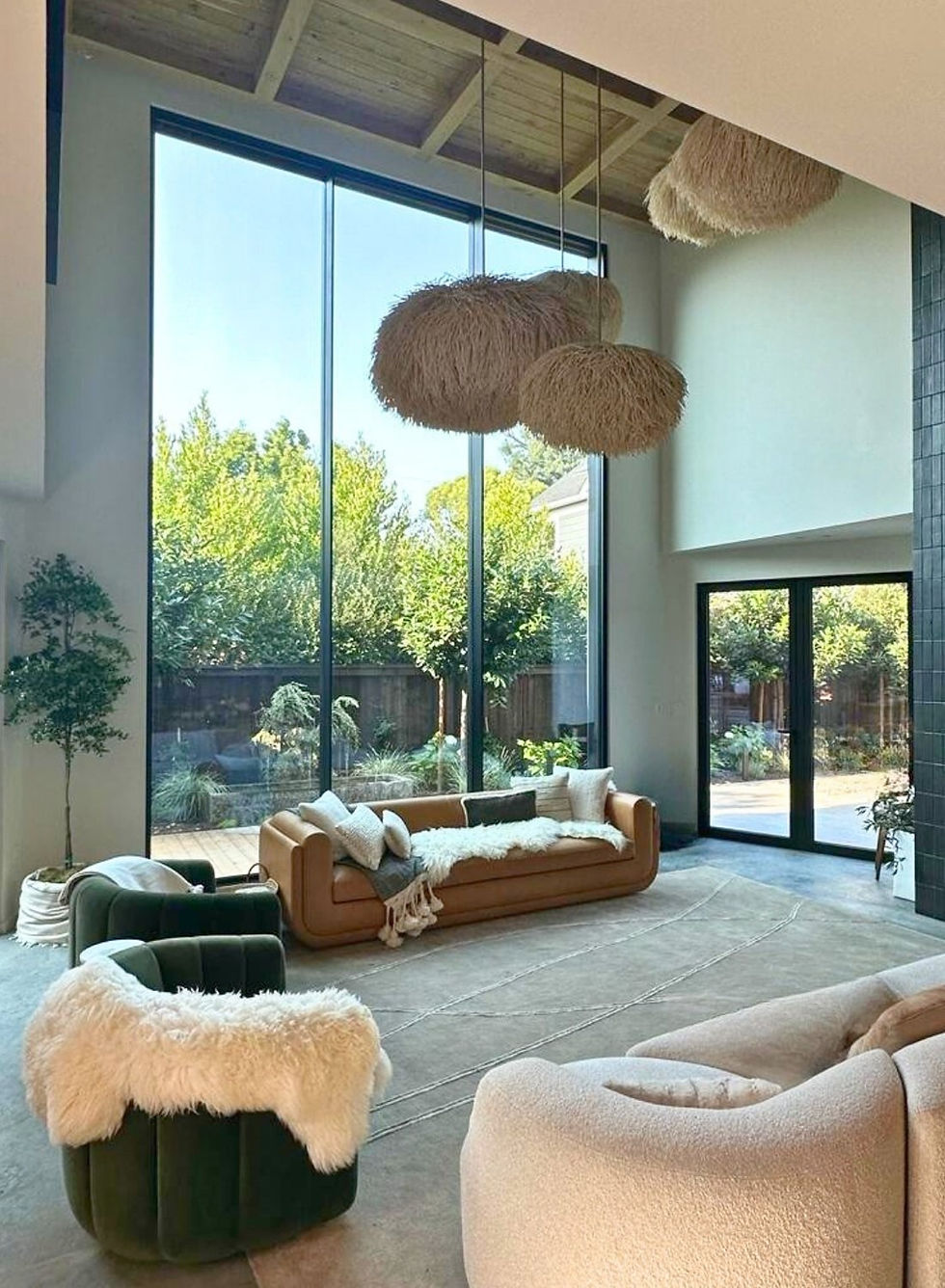
The industry uses "custom" to mean two very different things, and the distinction has consequences for project outcomes.
Configurable aluminum doors offer selection within predefined parameters. The buyer chooses from available sizes, finishes, hardware packages, and glazing options. The underlying product is standardized; the configuration is variable. These systems serve many applications well, but they do not respond to architectural intent. They constrain it.
True custom aluminum door systems are engineered to specification. Where customization actually happens:
Dimensions: Panel heights beyond standard ceiling profiles, panel widths that respond to view corridors, opening configurations that match site conditions rather than manufacturer convenience
Profile geometry: Frame and stile dimensions tuned to minimize sightlines while meeting structural requirements, with custom extrusion profiles available from manufacturers with in-house tooling capability
Finishes: Full RAL powder coat range, anodized natural and bronze, bicolor configurations where interior and exterior finishes differ to match different design schemes
Custom hardware integration: Concealed hinges engineered to panel weight, multi-point locking systems, customized pull and lever specifications, motorization integration where required
Glazing depth: Frame profiles that accommodate triple-pane insulating glass units, laminated security glass, or specialty coatings without compromising panel proportion
Tolerance standards separate the categories. Configurable systems work within manufacturer tolerances measured in fractions of an inch. Custom systems hold tighter tolerances, with quality control documentation that follows each panel from extrusion through finishing.
When evaluating a manufacturer's claim of customization, the question to ask is specific: does the system get engineered to the drawing, or does the drawing get adapted to the system?
The Aluminum Door Advantage in Luxury Architecture
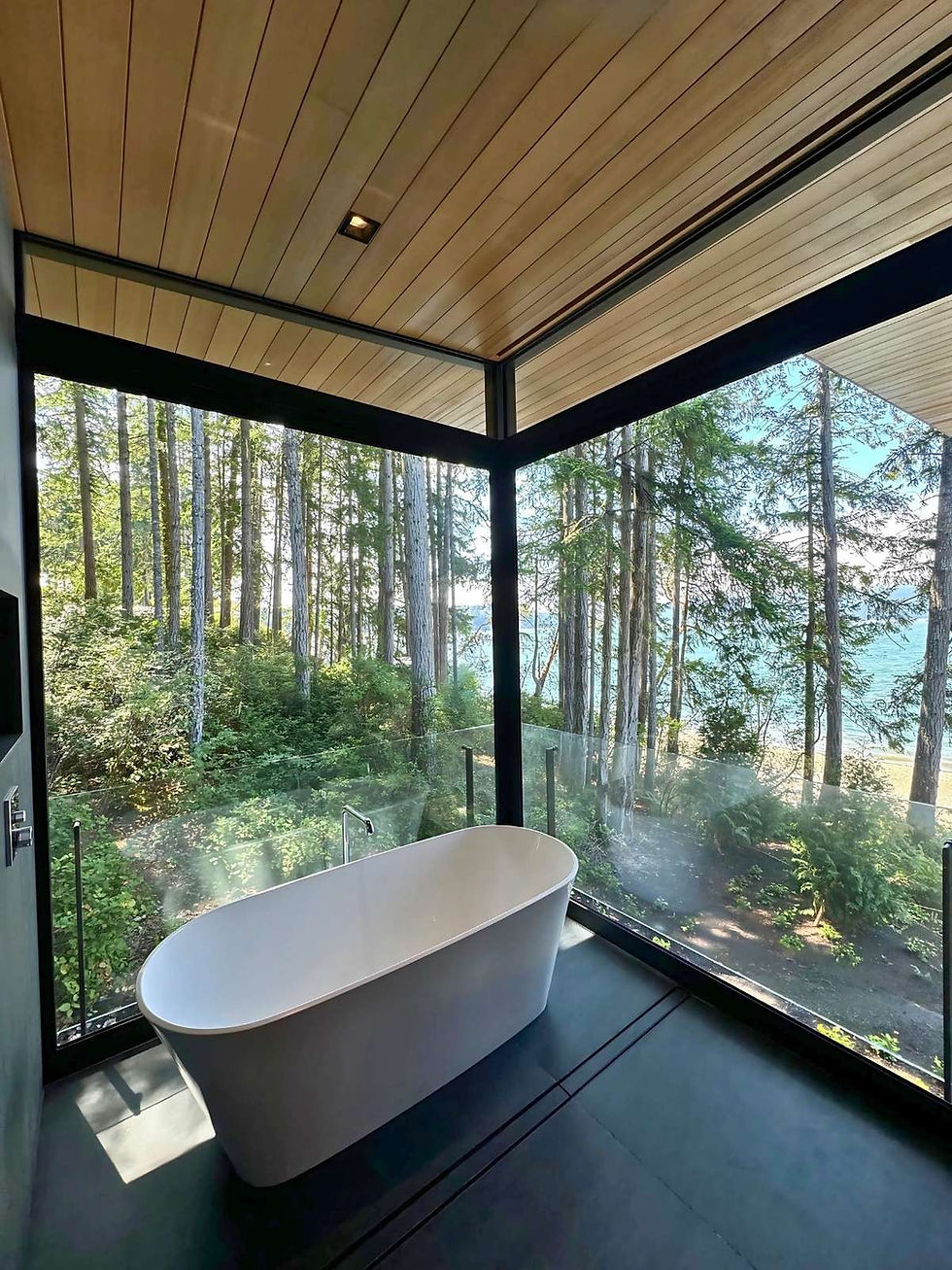
Aluminum's properties make it uniquely suited to contemporary residential architecture, where expansive glass areas, narrow sightlines, and long-term durability define the specification brief.
The material's strength-to-weight ratio enables panel sizes that no other framing material can match. Aluminum frames support panels exceeding twenty feet in height while maintaining sightlines under one and a quarter inches. Steel approaches similar strength but demands corrosion management that adds maintenance burden over decades. Wood offers warmth and natural insulation but cannot achieve the proportions that modern architecture often demands. Aluminum delivers both engineering capability and design discipline, supporting sleek profiles that no other framing material can achieve at scale.
Corrosion resistance derives from aluminum's natural oxide layer, which forms instantly on exposure to air and protects the underlying metal. Modern powder coat and anodized finishes add a second protective system. This dual-layer protection performs reliably in coastal environments, mountain climates with significant thermal cycling, and humid conditions that compromise other materials. For deeper engineering detail on how extrusion quality affects this performance, the extruded aluminum framing guide covers the manufacturing factors that determine long-term reliability.
Design flexibility extends across finish options unmatched by alternative materials. Full RAL powder coat range delivers consistent color across large assemblies. Anodized finishes produce natural champagne, bronze, and dark tones with depth that paint cannot replicate. Bicolor configurations support architectural compositions where the building envelope reads differently from inside and outside.
Aluminum windows share the same manufacturing foundations and material properties as aluminum doors, which matters for projects where door and window systems need to coordinate visually across the building envelope. The aluminum windows guide for luxury homes covers the parallel considerations for window specification on the same project.
Performance against alternative materials reduces to a simple comparison. Aluminum delivers the strength of steel without the corrosion management. It delivers design flexibility wood cannot achieve at scale. It outperforms vinyl on every metric that matters in luxury residential specification. The material's properties are not the variable. The engineering applied to those properties is.
Custom Aluminum Door Systems: Configurations and Applications

Custom aluminum door systems exist in several configurations, each suited to specific architectural conditions. Selection depends on the opening size, operational requirements, weather exposure, and the functionality the door must deliver within the building's spatial organization.
Pivot Doors
Pivot doors rotate on a central axis rather than swinging from side-mounted hinges, which enables monumental panel sizes for entry applications. Custom aluminum pivot doors regularly exceed ten feet in height and four feet in width, with weight loads that conventional hinges cannot support. The pivot mechanism is engineered to the specific panel weight, and concealed hardware integration preserves the clean profile that defines the system's architectural appeal. The pivot door installation guide covers structural integration requirements and specification considerations for oversized applications.
Multi-Slide Doors
Multi-slide systems use multiple panels that glide along precision tracks and stack to one or both sides of the opening, including configurations where panels pocket into adjacent walls and disappear entirely. These systems excel at creating uninterrupted indoor-outdoor transitions across openings of forty feet or more. Custom multi-slide configurations support panel weights into the thousands of pounds with sill options that include flush thresholds for true seamless transitions. The multi-slide doors luxury guide details panel configurations and stacking strategies.
Lift-and-Slide Doors
Lift-and-slide systems lift panels off their tracks before horizontal movement, which reduces friction and enables smooth operation of substantial panel weights. When closed, panels settle into weatherproof seals that deliver superior thermal and acoustic performance compared to standard sliding systems. This makes lift-and-slide the right specification for projects in demanding climates where seal integrity matters as much as operational scale. The lift-and-slide guide for architects and builders covers the mechanical engineering and specification details.
Folding and Bifold Doors
Folding systems use hinged panels that concertina against one side or both sides of the opening. The geometry suits openings where panels need to clear the opening completely rather than stack within it, and the system performs reliably across configurations from three panels to twelve or more. The folding door systems guide covers panel configurations and operational considerations.
Corner Door Systems
Corner systems eliminate the structural post at the meeting of two perpendicular walls, creating a continuous opening that defines indoor-outdoor design in contemporary architecture. The engineering challenge is significant: the corner must support roof loads without the post, requiring structural coordination during the framing phase. When executed correctly, corner systems deliver an architectural moment that conventional door configurations cannot achieve. The corner door systems design and installation guide covers structural requirements and installation sequencing.
Custom Sliding Glass Doors
Custom sliding glass doors function as a category that overlaps with multi-slide and lift-and-slide systems but extends to single-panel and two-panel configurations where the architectural intent is restrained rather than expansive. The customization parameters remain the same: panel dimensions, sightline width, hardware specification, and glazing options. The custom sliding glass doors guide covers design options across configurations.
Entry Door Applications for Custom Aluminum

Entry doors carry a specific weight in residential architecture. They define the first impression of the home, signal the design language of what lies beyond, and provide the primary security and safety threshold for the structure. Custom aluminum offers capabilities that other materials cannot match for this application.
Security Engineering
Custom aluminum entry doors integrate multi-point locking systems that engage the frame at three to five points along the panel height. The locking mechanism is concealed within the frame and operated by a single handle or keyed cylinder, which delivers security performance significantly beyond a standard deadbolt. Anti-pry profiles and laminated security glass complete the protection package without compromising the design.
Structural Strength
Aluminum's strength-to-weight ratio supports entry door panels at dimensions that traditional materials cannot achieve. Pivot configurations reach twelve feet in height for monumental entries, and the structural integrity remains uncompromised across the panel's lifetime. The hardware engineering scales to the panel weight, with hinges and pivot mechanisms specified to the load rather than selected from a catalog.
Aesthetic Role
The entry door performs an aesthetic function alongside the security function. Custom aluminum supports finishes that range from contemporary bronze anodized profiles to powder coated panels matched to specific architectural color schemes. Custom hardware selection extends from concealed pulls to substantial lever sets, all coordinated to the panel proportion and the style of the entryway. The result is an entry door that reads as a stylish architectural element rather than a functional afterthought.
For specific design language considerations, the pivot door styles modern design guide covers aesthetic options for pivot entry applications.
Glass Options for Custom Aluminum Doors

Glazing is not an accessory to a custom aluminum door system. It is integral to thermal performance, acoustic performance, security, and the visual character of the assembly. Specifying the glass correctly requires understanding the options and their performance implications.
Insulating glass unit construction ranges from double-pane to triple-pane configurations. Double-pane units with low-emissivity coatings and argon fill deliver strong thermal performance for most residential applications. Triple-pane units add a third glass layer and a second gas-filled cavity, which significantly improves thermal performance for projects in extreme climates or where Passive House standards apply.
Low-emissivity coatings are microscopically thin metallic layers applied to the interior surfaces of the glass. They reflect infrared energy while allowing visible light to pass, which improves thermal performance without compromising natural light. Coating selection varies based on solar orientation and climate, with different coatings optimized for heat retention versus solar control.
Gas fills in the cavity between glass layers reduce conductive heat transfer. Argon is the standard specification and delivers measurable improvement over air-filled units. Krypton offers slightly better performance and enables thinner cavities, which matters when frame profile depth constrains the glazing dimensions.
Laminated glass adds a polyvinyl butyral interlayer between two glass layers, which delivers security performance and acoustic improvement. Laminated configurations resist break-through significantly longer than tempered glass alone and reduce sound transmission by measurable margins.
Specialty coatings and treatments include reflective coatings for solar control, frit patterns for privacy and bird-friendly applications, and electrochromic glass that adjusts tint in response to electrical signal.
Glazing depth in the frame profile determines which glass options are possible. Frame profiles engineered for triple-pane glazing accommodate insulating units up to two and a quarter inches thick. Profiles designed for double-pane glazing constrain the specification to thinner units. The architectural glass systems guide covers glazing options in depth across system types.
The natural light delivered through expansive custom aluminum doors transforms interior spaces. The seamless transition from interior to exterior, achieved through flush sills and large-format glazing, defines contemporary residential architecture in a way no other building element matches.
Thermal Insulation and Energy Performance

Aluminum is a thermal conductor, which historically limited its use in cold-climate applications. Modern thermal break technology has eliminated this limitation through engineering that interrupts the heat transfer path within the frame profile.
How Thermal Breaks Work
A thermal break is an insulating barrier installed between the interior and exterior aluminum components of the frame. Polyamide is the industry standard material because it delivers consistent thermal performance, structural integrity equal to aluminum, and dimensional stability across temperature cycles. The polyamide strips run continuously through the frame profile, interrupting the metal-to-metal contact that would otherwise transfer heat.
The engineering quality of the thermal break determines the system's overall energy performance. Profile depth, polyamide width, and the geometry of the assembly all affect the U-value the system can achieve.
Performance Benchmarks
U-value measures the rate of heat transfer through the assembly, with lower numbers indicating better insulation. High-performance custom aluminum door systems achieve U-values that meet or exceed the requirements of demanding energy codes. The National Fenestration Rating Council publishes the certification standards that allow direct comparison between manufacturers and systems.
For projects in mountain climates with significant temperature differentials, U-value specification matters significantly. A door system that performs well at moderate temperature differentials may underperform when interior conditions are seventy degrees and exterior conditions reach below zero. Specification documentation should include performance data across the weather conditions the building will experience, since energy efficiency under real-world conditions matters more than performance under laboratory averages.
Acoustic Performance
Thermal break engineering delivers acoustic benefits alongside thermal performance. The polyamide interruption breaks the sound transmission path through the frame, and the laminated glazing options that complement thermal break systems further reduce sound transmission. For projects near transportation corridors or in dense neighborhoods, the combined effect can deliver acoustic performance comparable to solid wall construction.
The thermal break windows article covers the engineering principles in greater detail and applies to door systems as well, since the thermal break technology operates on the same principles across the fenestration assembly.
The European Manufacturing Advantage

The most capable custom aluminum door manufacturers operate in Europe. Sosoares in Portugal, alongside several Italian and Spanish manufacturers, lead the global market in extrusion expertise, profile engineering, and quality control. Lucent's primary aluminum manufacturer partnership is with Sosoares for this reason: the manufacturing capability matches the design ambition.
Extrusion Expertise
European manufacturers operate vertically integrated facilities where extrusion, finishing, and assembly happen under one roof with shared quality control. Extrusion, glass transformation, finishing, and assembly under one roof with shared quality control means a custom profile developed for a specific project moves through the same facility at every stage. Independent suppliers cannot match this coordination. This integration enables custom profile development, tight tolerance control, and rapid iteration when project requirements demand non-standard solutions. The extrusion press technology and tooling capability determine what's actually possible at the profile level.
Cost Reality
A common misconception suggests European doors cost more due to international shipping. The reality is different. European manufacturers typically deliver superior value at twenty to forty percent less cost than domestic alternatives for comparable quality. The shipping cost is real but represents a small fraction of the total project cost, and the manufacturing efficiency of vertically integrated European facilities more than offsets it.
Lead time is the more relevant variable. European custom aluminum door projects typically require ten to sixteen weeks from order to delivery, depending on configuration and finish complexity. Specification timing matters more than budget in most projects.
Certification Standards
European manufacturers operate under CE certification requirements that establish performance standards across thermal, acoustic, structural, and weather resistance criteria. The European Commission CE marking documentation outlines what the certification actually requires. For projects in the United States, CE certification operates as a quality indicator rather than a regulatory requirement, but the testing rigor exceeds what most domestic specifications demand.
The combination of manufacturing capability, cost efficiency, and certified performance makes European custom aluminum doors the appropriate specification for serious residential architecture.
Selecting a Custom Aluminum Door Partner

The choice of manufacturer and supplier shapes the project outcome more than any other single decision in door system specification. Six criteria separate genuine partners from sales operations.
Minimalist Design Capability. The manufacturer must demonstrate the ability to deliver thin profiles that maximize glass area and minimize visual obstruction. Sightline specifications should be available in writing, and reference projects should confirm the manufacturer can execute the proportions the architect requires.
High Performance Engineering. Thermal break technology, acoustic insulation, and certified performance ratings should be standard rather than upgrades. The manufacturer should provide certification documentation from recognized standards bodies, and the performance data should match the specifications the building requires.
Security and Durability Standards. Multi-point locking, anti-pry profiles, laminated glazing options, and structural hardware engineered to the panel weight should be available as integrated specifications. The American Architectural Manufacturers Association maintains the certification programs that establish baseline standards for security and durability performance.
System Versatility. A capable partner offers the full range of system configurations: sliding, lift-and-slide, multi-slide, pivot, folding, and corner. Specifying a partner who only offers one or two configurations limits the architect's ability to select the right system for each opening.
Integrated Solutions. The aluminum framing must coordinate with the glazing specification, hardware integration, and automation systems where required. Manufacturers who treat these as separate categories produce assemblies that perform below their potential. Genuine partners coordinate the specification across components.
Technical Support. The capability to support the project from initial specification through installation defines the partnership. This includes preliminary engineering review, shop drawing development, installation training for the field team, and post-installation service. Manufacturers who deliver products without the supporting expertise transfer the integration burden to the architect and the installer.
The criteria are not weighted equally. Technical support and engineering capability matter most because they determine whether the project succeeds or struggles.
Pacific Northwest and Mountain West Considerations
Lucent serves Washington, Oregon, Idaho, Montana, and Wyoming, regions where custom aluminum door specification responds to specific climate and structural conditions.
Coastal projects in the Puget Sound region and Oregon coast face salt air corrosion that demands finish quality and material specification appropriate to marine environments. Powder coat finishes with marine-grade primer and anodized finishes both perform reliably when specified correctly.
Mountain projects in Idaho, Montana, and Wyoming face weather conditions including significant thermal cycling, snow loads on adjacent structures, and seismic activity. Door systems specified for these conditions require thermal performance documentation across the temperature ranges the building will experience, structural engineering coordinated with the surrounding framing, and seismic detailing where applicable.
The Pacific Northwest door materials guide covers material selection for regional conditions in greater depth.
Frequently Asked Questions
What makes an aluminum door "custom" rather than configurable?
Custom aluminum doors are engineered to specification rather than selected from predefined options. The distinction lies in whether the system responds to the architectural drawing or requires the drawing to adapt to the system. True customization includes engineered-to-spec dimensions, custom extrusion profiles where required, hardware engineered to the specific panel weight, and finishes selected from full RAL and anodized ranges rather than limited palettes.
How do custom aluminum doors compare to steel or wood doors?
Custom aluminum doors deliver strength comparable to steel without the corrosion management burden, and design flexibility wood cannot achieve at large panel sizes. Aluminum supports panel heights exceeding twenty feet that wood cannot structurally achieve. Steel offers similar strength but requires more intensive finish maintenance. Wood offers warmth and natural insulation but cannot match aluminum's dimensional capability or long-term maintenance profile.
Are aluminum doors energy efficient in cold climates?
Modern aluminum doors with thermal break technology deliver energy performance suitable for cold climates including mountain regions. Polyamide thermal breaks interrupt heat transfer through the frame, and triple-pane glazing with low-emissivity coatings and argon or krypton gas fills complete the thermal package. High-performance custom aluminum door systems meet or exceed the requirements of demanding energy codes when specified correctly.
What dimensions can custom aluminum doors achieve?
Custom aluminum door panels routinely exceed twelve feet in height, and panels at twenty feet and beyond are achievable for pivot and multi-slide configurations. Panel widths vary by system: pivot doors typically reach six feet in width, multi-slide and lift-and-slide panels reach eight to ten feet per panel, and corner systems extend across full architectural openings. The actual dimensions depend on weight load, hardware specification, and structural integration.
Why specify a European aluminum door manufacturer?
European manufacturers lead in extrusion expertise, profile engineering, and certified performance standards. They typically deliver twenty to forty percent better value than comparable domestic alternatives, with shipping costs offset by manufacturing efficiency. CE certification establishes thermal, acoustic, structural, and weather resistance standards that exceed many domestic specifications. The combination of capability and value makes European specification the appropriate choice for serious residential projects.
How long does a custom aluminum door project take from specification to installation?
Custom aluminum door projects typically require ten to sixteen weeks from order placement to delivery, depending on configuration complexity, finish specification, and manufacturer capacity. Specification work should begin early in the architectural process to coordinate with structural framing and integrate with adjacent building systems. Installation timing depends on site readiness and crew availability after delivery.
What should an architect provide when specifying a custom aluminum door?
Architects should provide opening dimensions, structural conditions at the opening, climate and exposure data, required performance specifications including U-value and acoustic ratings, finish selections, hardware preferences, glazing requirements, and integration details for automation or security systems where applicable. Specification work should begin at the schematic design phase, not at construction documents. Decisions made about door system type and dimensions affect structural framing, electrical rough-ins, and finish coordination across multiple trades. Architects who specify late typically encounter integration problems that early specification would have prevented.
Bringing Your Custom Aluminum Door Vision to Reality
Lucent specializes in translating architectural vision into precision-fabricated reality. Through partnerships with vertically integrated European manufacturers including Sosoares, we deliver custom aluminum door systems engineered to the specific demands of luxury residential architecture. Our installer-founded approach means specification, engineering coordination, and installation expertise come integrated rather than handed off between disconnected operations.
Lucent currently provides signature consultation, installation, and service experience in select markets including Washington, Oregon, Idaho, Montana, and Wyoming. For inquiries outside these regions, contact us to discuss potential accommodations.
To discuss your project, contact our team or call (425) 780-5460. We provide preliminary engineering review and specification support from the earliest project phases through installation completion.